Let’s clear up the name first
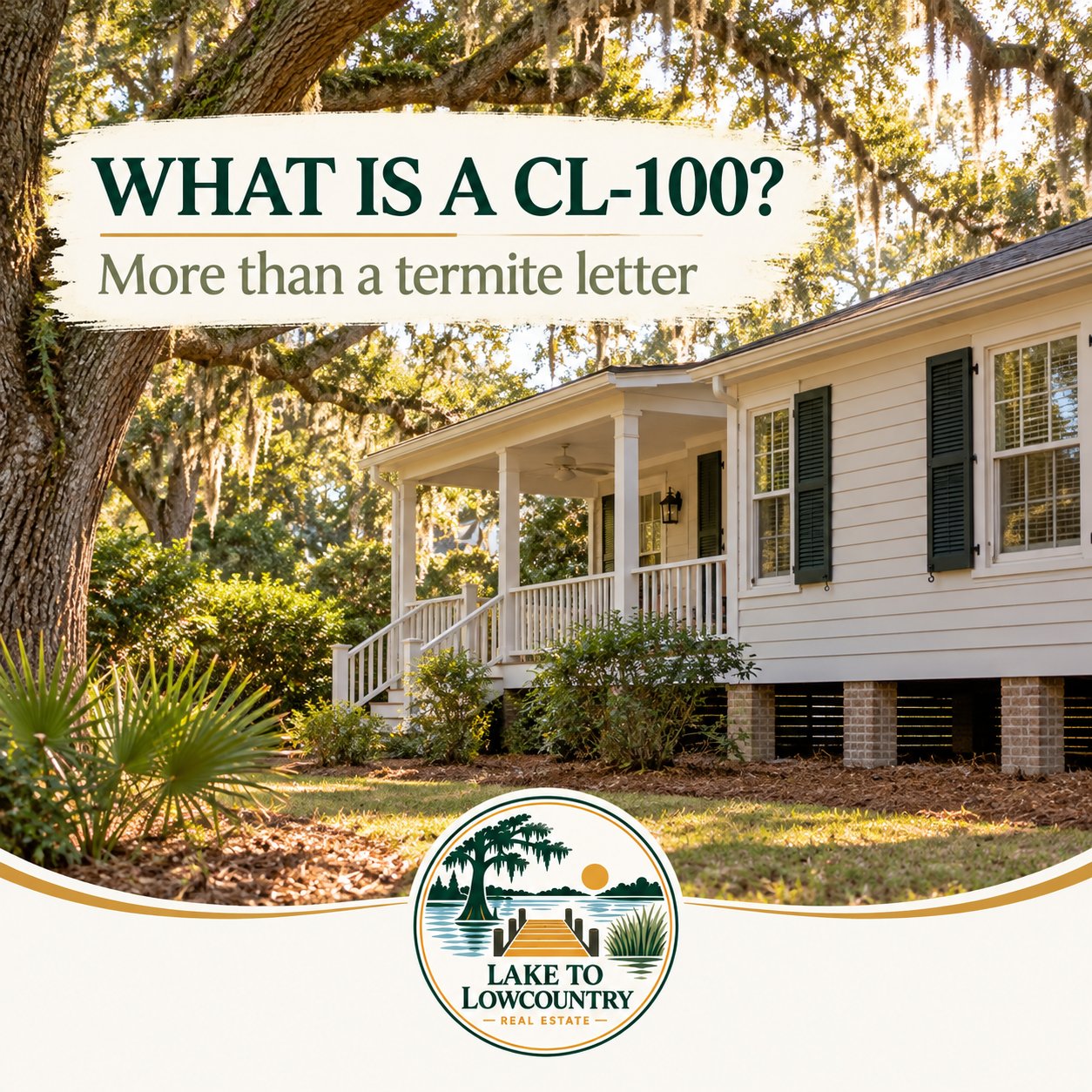
In South Carolina, the CL-100 is the Official Wood Infestation Report. “Termite letter” is the nickname many people use, but termites are only part of the picture. The report addresses visible evidence of termites and other wood-destroying insects, damage, wood-destroying fungi and decay in the areas covered by the inspection, and moisture readings in accessible parts of the structure.
That matters here in the Lowcountry. A home’s crawlspace and moisture conditions can raise questions just as quickly as a termite finding. The report gives buyers and lenders information from a licensed pest-control professional about what was visible and accessible on the day of the inspection.
What the inspection looks at
South Carolina’s rules call for a visual inspection of accessible parts of the structure, including areas such as crawlspaces, utility spaces, and attics. The official form also explains that inspectors do not open walls or move stored belongings, and that areas hidden or not readily accessible are outside the inspection unless separately arranged. Detached buildings are not automatically included unless the report specifically says they were inspected.
So when you read a CL-100, remember that it is a snapshot of observed conditions in the areas the inspector could access. It is not a full home inspection, a structural engineering report, or a promise that there is no hidden damage. It also does not test indoor air quality or diagnose health-related mold concerns.
Why I want buyers and sellers to understand it
I have seen how quickly the phrase “termite letter” can make people think they already know what the report says. They may picture one simple yes-or-no answer. In reality, the report can include different details about activity, prior activity, damage, moisture, and parts of the structure that could not be inspected. Taking a moment to understand the whole report can lead to better questions and fewer surprises.
The report form states that it is valid for 30 days and is not a warranty against future infestation or damage. That is another reason to read the report itself instead of relying on a quick summary or a casual “it was clear.”
A useful place to start
If you are buying or selling in South Carolina and a CL-100 comes up, ask to see the full report. In Part 2, I’ll walk through the kinds of findings and notes you may see—and what the report can and cannot tell you.
Sources: Clemson University Department of Pesticide Regulation, Official Wood Infestation Report: https://www.clemson.edu/public/regulatory/pesticide-regulation/forms/wood-infestation-report.pdf | South Carolina Regulation 27-1085(K): https://www.scstatehouse.gov/coderegs/Chapter%2027.pdf