Don’t stop at the first checkbox
When someone hands you a CL-100, it is natural to look for the quickest answer: did the inspector mark yes or no? I understand that instinct. But the notes and explanations are where you learn what the inspector saw, where it was located, and whether an area could not be inspected.
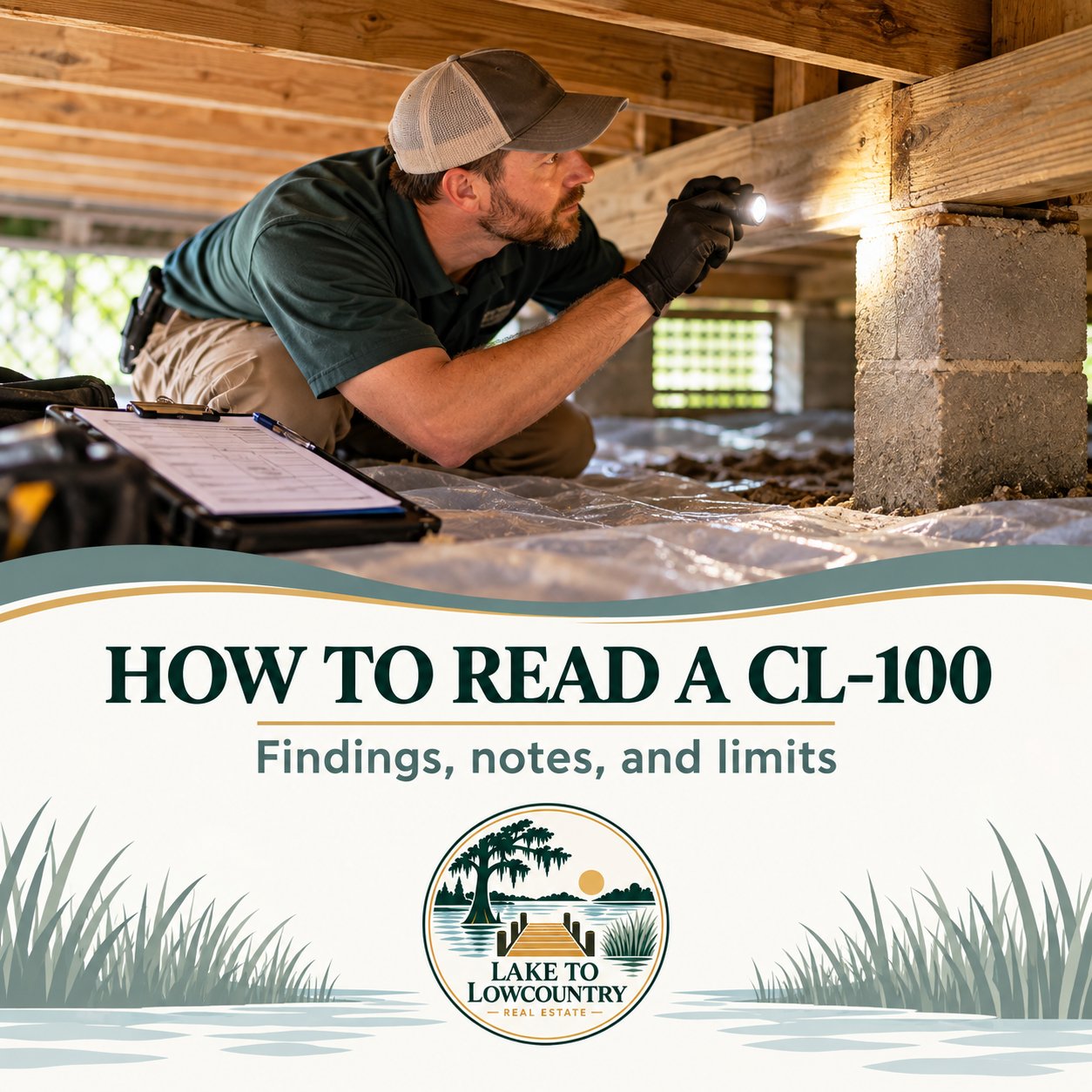
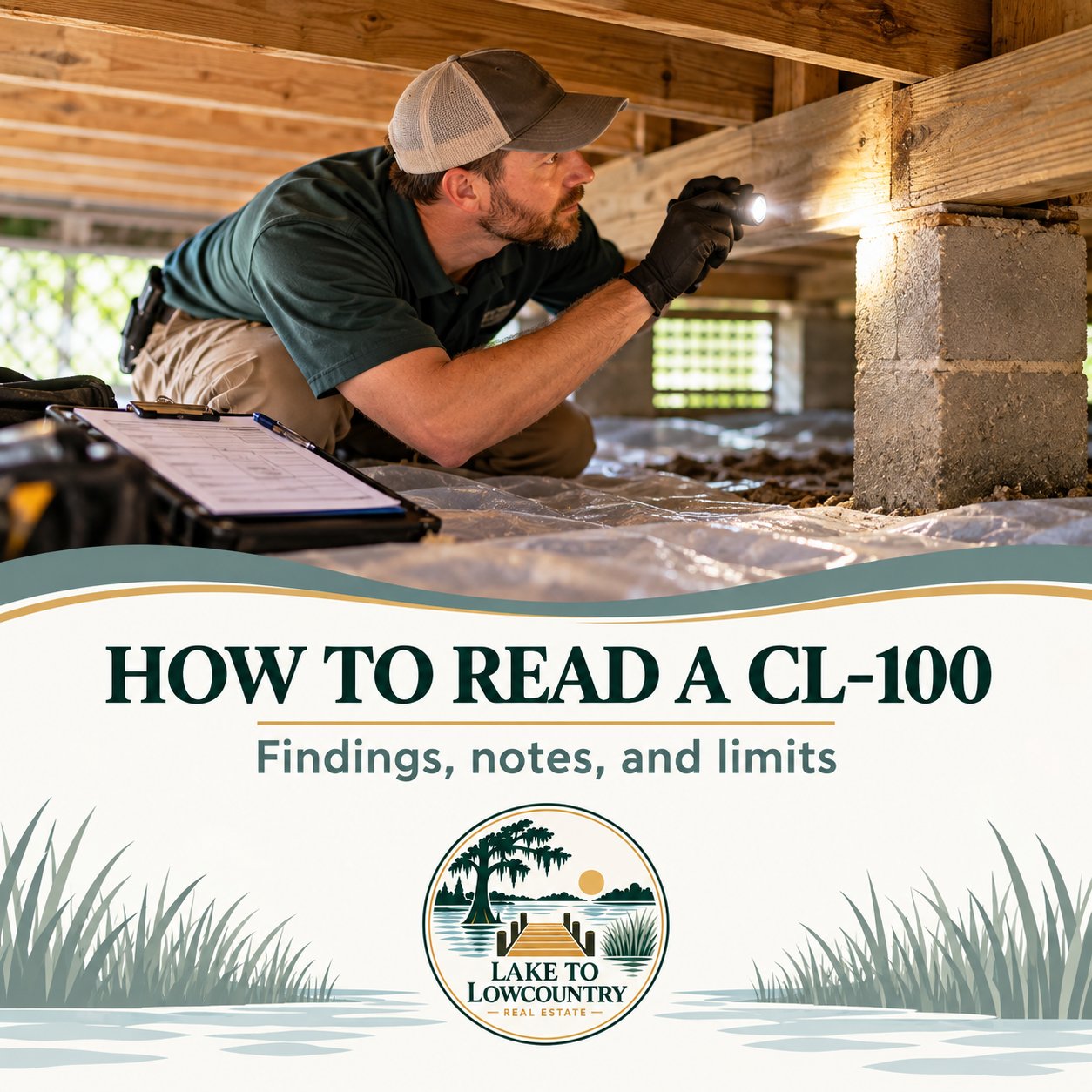
The report is meant to identify visible active or previous wood-destroying insect activity, visible damage, and relevant moisture or decay observations in the accessible areas. South Carolina’s rules require findings to be described, including their location and approximate extent. If you see a “yes,” look for the explanation that goes with it. If a section mentions an inaccessible area, that tells you the inspection did not cover that space.
A finding is information, not a diagnosis of the whole house
A note about past activity is not the same as a statement that there is active activity today. A note about damage is not, by itself, a structural assessment. And no visible evidence in the accessible areas does not tell you what might be behind a finished wall, under stored items, or in another excluded space.
If the report mentions activity or damage and you are unsure what the wording means, the person who performed the inspection is the right person to explain what they observed. If the report identifies damage that raises a structural question, the form recommends further investigation by a qualified building professional. That is where I step back and let the right specialist evaluate it.
What about moisture?
Moisture readings and notes can be part of the report, particularly in accessible parts of the substructure. A reading is a measurement taken at a particular place and time. It can be useful information, but it does not explain every cause or tell you by itself what work, if any, may be appropriate. For that, ask the inspector what the report records and consult the qualified professional who can assess the specific condition.
One phrase I would not rely on by itself
People sometimes summarize a CL-100 by saying “it was clear.” That shorthand can leave out important context. The official report describes what the inspector observed in accessible areas; it is not a warranty, a structural report, or a guarantee about what may happen later. I always encourage people to read the actual notes and ask questions when something is unclear.
In Part 3, we’ll talk about what buyers and sellers can do when a CL-100 includes a finding—and why the contract matters before anyone assumes who is responsible for what.
Sources: Clemson University Department of Pesticide Regulation, Official Wood Infestation Report: https://www.clemson.edu/public/regulatory/pesticide-regulation/forms/wood-infestation-report.pdf | South Carolina Regulation 27-1085(K): https://www.scstatehouse.gov/coderegs/Chapter%2027.pdf